Understanding valorant sentinels –the defensive backbone of your team
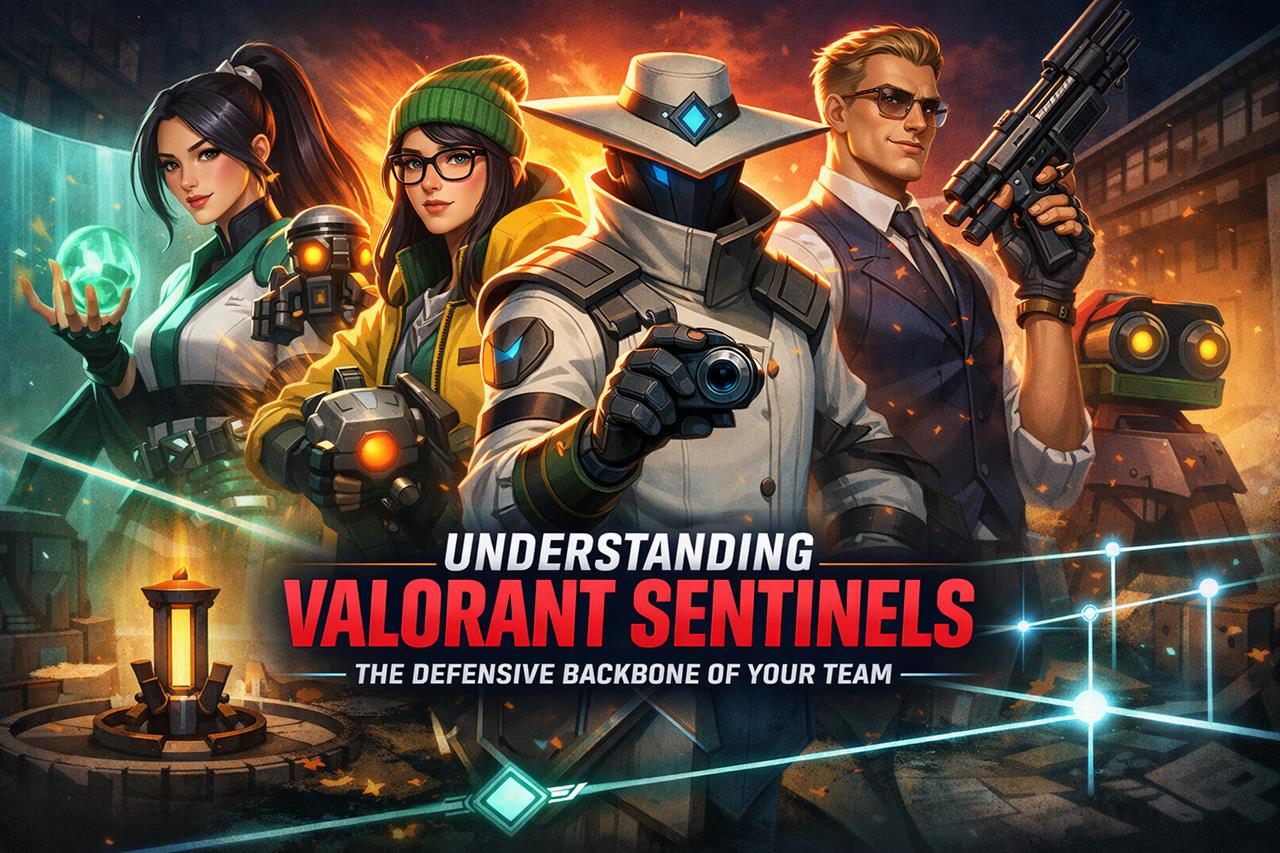
In Valorant, agents are categorized into four primary roles - Duelists, Initiators, Controllers, and Sentinels. Each class brings a unique set of abilities and strategic priorities to the battlefield. Among them, Valorant sentinels play a crucial role in defending key areas, supporting teammates, and planning site holds. This article delves into the role of Sentinels, how they function, and which agents fall under this essential category.
What is a Sentinel in Valorant?
Sentinels are the defensive anchors in Valorant. Their primary responsibility is to lock down areas, prevent enemy flanks, and support their team through healing or intel gathering. Unlike Duelists who thrive on aggressive plays, Sentinels focus on slowing the enemy's momentum and providing tactical advantages through utility and positioning.
Core Responsibilities of a Sentinel
- Site Anchoring: Sentinels are ideal for holding bomb sites, especially during defense. Their utility allows them to slow or stop pushes effectively.
- Flank Watching: Due to their ability to place traps and gadgets, Sentinels can cover potential flanking routes, allowing their teammates to focus on direct threats.
- Healing and Support: Some Sentinels, like Sage, also offer healing capabilities, ensuring their team stays in fighting condition.
Notable Sentinel Agents
Sage
Sage is arguably the most iconic Sentinel. Her kit includes a healing orb, a slowing orb, a wall for blocking entry points, and a resurrection ability as her ultimate. Sage's utility is versatile - she can support aggressive pushes or reinforce defenses depending on the scenario. Her healing ability is especially useful in sustaining teammates during prolonged engagements.
Killjoy
Killjoy excels at area denial and information gathering. With her Turret, Alarmbot, and Nanoswarm grenades, she transforms sections of the map into no-go zones for enemies. Her Lockdown ultimate can force an entire team to retreat, delay a push, or secure an area during post-plant scenarios.
Cypher
Cypher is a master of surveillance. Using a Spycam, Tripwires, and Cyber Cages, Cypher can monitor multiple areas simultaneously. His tools allow him to gather crucial information without exposing himself, and his ability to detect flanking enemies makes him a valuable asset on both attack and defense.
Chamber
Chamber brings a balance of firepower and utility to the Sentinel role. With a focus on precise shooting and teleportation through his Rendezvous ability, Chamber can hold aggressive angles and quickly reposition. His ultimate, Tour De Force, is a high-powered sniper rifle that delivers lethal results. Chamber plays more like a hybrid of Sentinel and Duelist, but his ability to control space makes him fit within the Sentinel archetype.
Sentinels in Team Composition
Including at least one Sentinel in your team composition is vital in most scenarios. Their ability to delay pushes, prevent flanks, and offer healing can drastically change the course of a round. Depending on your team's strategy - whether it's a turtle-style defense or a site-retake focus - the choice of Sentinel can vary.
Choosing the Right Sentinel
Each Sentinel agent brings unique strengths. For example:
- Choose Sage on maps with narrow choke points where her wall and slows are most effective.
- Use Killjoy on maps with tight control zones where her turret and grenades can cover multiple angles.
- Cypher shines on larger maps where flanking is common and surveillance is key.
- Chamber fits teams needing a high-skill anchor that can duel as well as provide site control.
Conclusion
Valorant Sentinels are indispensable for any balanced team. Their combined abilities to manage space, gather intel, and protect their teammates bring structure to both offense and defense. Whether you're climbing the ranks or forming a competitive team, understanding and utilizing Sentinels correctly will give you the strategic edge you need to succeed.